
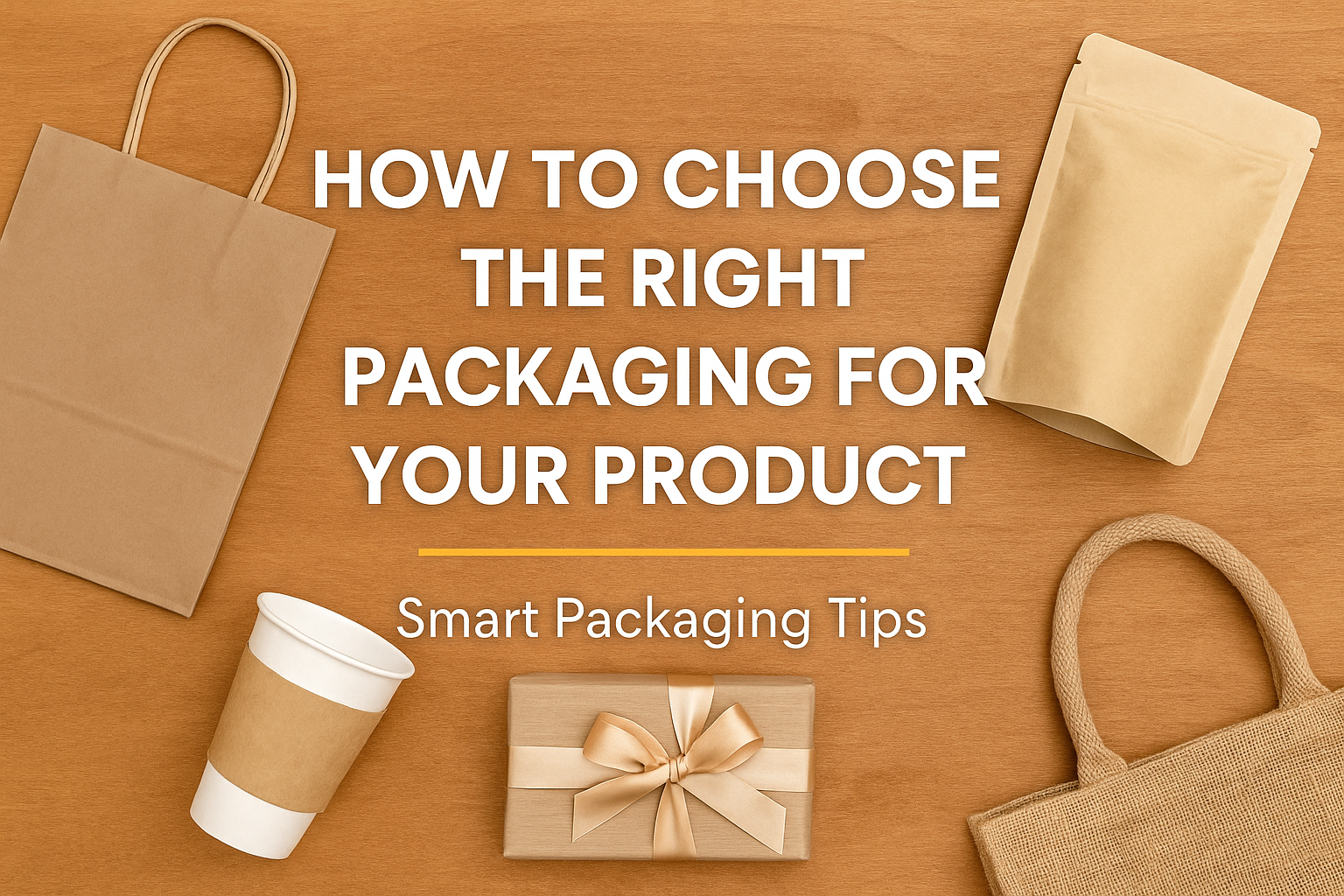
In today’s competitive market, packaging is far more than just a container—it’s a powerful tool for branding, protection, marketing, and customer experience. Whether you’re launching a new product or refreshing your brand, selecting the right packaging can be the key to your product’s success.
Let’s explore how to make strategic packaging choices that align with your brand values, protect your product, and resonate with your customers.
🎯 1. Understand Your Product
Every product has specific needs. Is it fragile, perishable, heavy, or oddly shaped? The nature of your product will influence the type of materials and structure your packaging requires.
Key Considerations:
- Size & Shape: Custom sizes reduce waste and shipping costs.
- Durability: Fragile items need cushioning and sturdy materials.
- Shelf Life: Perishable goods might require vacuum-sealed or moisture-resistant packaging.
🛍️ 2. Know Your Target Audience
Your packaging should appeal to the preferences and lifestyle of your ideal customer. Is your target market eco-conscious? Do they value luxury, minimalism, or bold visuals?
Tips:
- Use colors and graphics that reflect your brand identity and customer expectations.
- Match packaging style with demographic trends (e.g., minimal for millennials, vibrant for Gen Z).
♻️ 3. Choose the Right Material
From cardboard to biodegradable plastics, your choice of material affects everything from cost to sustainability. More businesses are moving toward eco-friendly packaging to align with global sustainability goals and customer expectations.
Popular Options:
- Cardboard & Corrugated Boxes: Versatile and recyclable.
- Paper Bags: Cost-effective and biodegradable.
- Jute or Cotton Bags: Reusable and brandable.
- Glass & Metal: Premium appeal and reusable.
💡 4. Align With Your Branding
Your packaging is often the first physical interaction customers have with your product. It should reflect your brand’s mission, values, and identity.
What to Focus On:
- Logo placement
- Typography and messaging
- Color schemes and finish (matte, gloss, embossed)
📦 5. Functionality & User Experience
A well-designed package isn’t just about appearance—it’s also about ease of use. Think about how your product will be opened, resealed, and stored.
Examples:
- Resealable pouches for snacks
- Easy-pour spouts for liquids
- Sturdy handles for carry bags
🚚 6. Cost-Efficiency & Logistics
While it’s tempting to go for elaborate designs, practicality matters. Packaging must be optimized for storage, shipping, and inventory handling.
Questions to Ask:
- Is the packaging lightweight to reduce shipping costs?
- Can it be flat-packed or stacked?
- Will it withstand transport without damage?
🧪 7. Test Before You Launch
Before a full-scale rollout, test your packaging for durability, customer appeal, and environmental impact. Collect feedback and iterate based on user experiences.
Final Thoughts
Choosing the right packaging isn’t a one-size-fits-all process. It involves a careful balance of functionality, branding, customer preference, and environmental impact. Done right, packaging becomes an extension of your brand—a silent yet powerful salesperson on the shelf.
Make the investment in thoughtful, effective packaging—it could be the difference between your product being overlooked or picked up, again and again.