
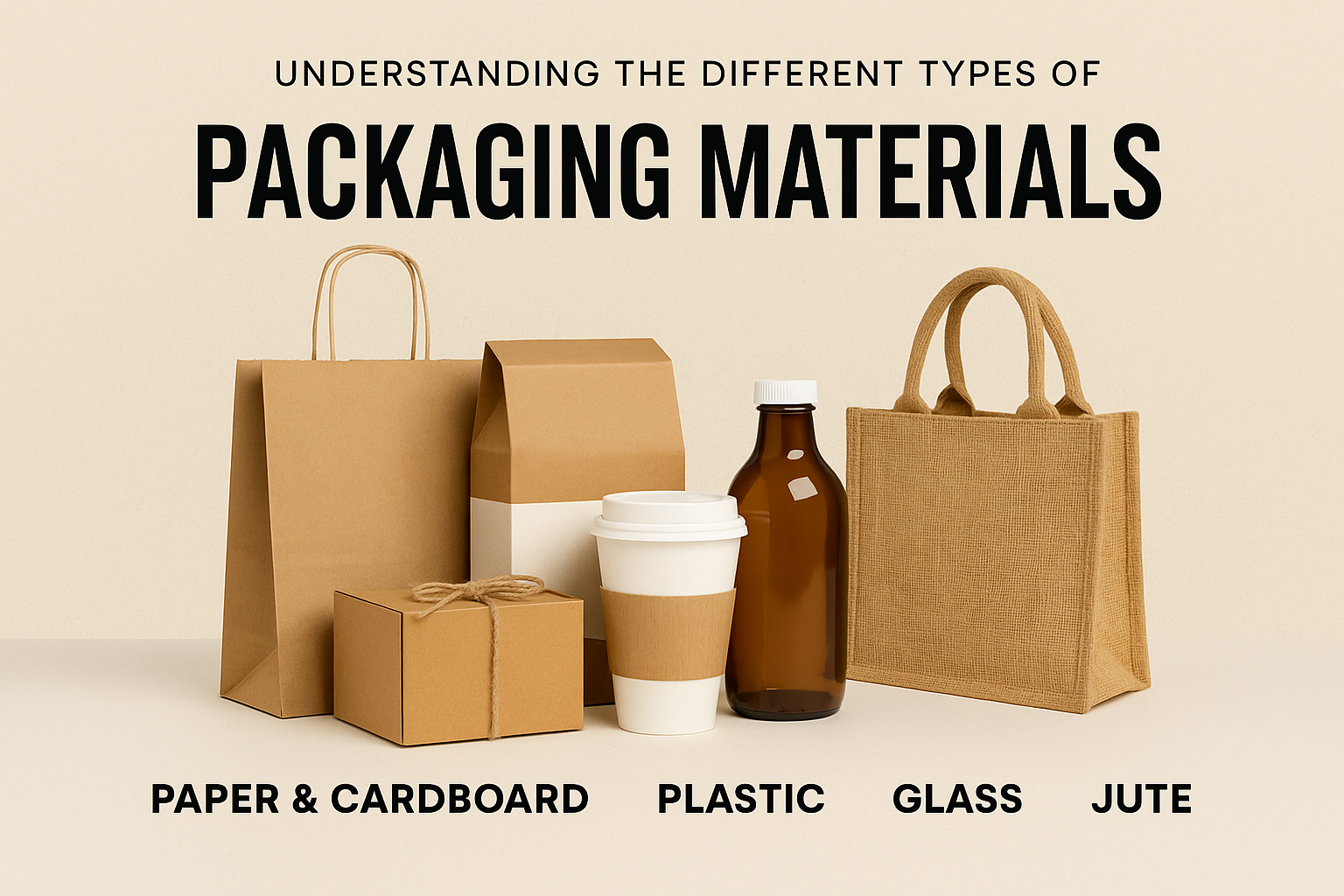
Understanding the Different Types of Packaging Materials
Packaging plays a vital role in product protection, branding, and sustainability. In today’s competitive market, selecting the right packaging material is not just a logistical decision but a strategic one. From sustainability goals to product compatibility and customer appeal, your choice of packaging material can directly impact your brand’s reputation and performance.
Let’s explore the most common types of packaging materials, their advantages, and their ideal use cases to help you make informed packaging decisions.
1. Paper and Cardboard Packaging
Overview:
Paper and cardboard are among the most widely used packaging materials due to their versatility, cost-effectiveness, and recyclability.
Advantages:
- Biodegradable and recyclable
- Lightweight and cost-effective
- Customizable for branding
Best For:
Retail packaging, gift boxes, cartons, and eco-friendly product displays.
2. Plastic Packaging
Overview:
Despite growing concerns about plastic waste, plastic remains a popular packaging material due to its durability, flexibility, and moisture resistance.
Advantages:
- Lightweight yet strong
- Offers excellent barrier protection
- Available in rigid and flexible forms
Best For:
Food and beverage containers, cosmetic packaging, and retail bags.
3. Glass Packaging
Overview:
Glass is a premium packaging material known for its non-reactivity and upscale appearance.
Advantages:
- Non-toxic and reusable
- Offers a premium look and feel
- 100% recyclable without quality loss
Best For:
Perfumes, cosmetics, food products, and beverages.
4. Metal Packaging
Overview:
Often used for food preservation and industrial packaging, metal offers high strength and long shelf life.
Advantages:
- Tamper-proof and durable
- Recyclable without degradation
- Excellent for long-term storage
Best For:
Canned goods, aerosols, and luxury product tins.
5. Jute and Cloth Bags
Overview:
These eco-friendly alternatives are gaining popularity due to rising environmental awareness.
Advantages:
- Reusable and biodegradable
- Strong and stylish
- Ideal for sustainable branding
Best For:
Retail carry bags, promotional giveaways, and eco-conscious branding.
6. Biodegradable and Compostable Packaging
Overview:
Made from materials like cornstarch, bagasse, or mushroom roots, these are designed to decompose naturally.
Advantages:
- Environmentally responsible
- Safe for composting
- Excellent for green branding
Best For:
Eco-conscious brands, food delivery services, and sustainable retail products.
Choosing the Right Material
When selecting a packaging material, consider:
- Product type and fragility
- Storage and transport conditions
- Brand identity and market positioning
- Sustainability goals
- Budget constraints
Partnering with a packaging solutions expert like Quantum Star ensures you get customized, eco-friendly, and high-performing packaging that resonates with your customers.
Conclusion
Understanding the types of packaging materials and their unique advantages empowers you to make strategic decisions that benefit your business and the environment. Whether you prioritize sustainability, durability, or aesthetics, there’s a material that fits your packaging goals.
FAQs
1. What is the most sustainable packaging material?
Paper, jute, and biodegradable materials like bagasse are among the most sustainable options.
2. Why is choosing the right packaging important?
It protects the product, enhances customer experience, and supports brand image and sustainability efforts.
3. Is glass packaging better than plastic?
Glass is more eco-friendly and premium-looking, but heavier and costlier than plastic.
4. What packaging material is best for food?
Plastic, paperboard, glass, and biodegradable materials are commonly used depending on the product type.
5. Can I combine different materials in my packaging?
Yes, hybrid packaging like glass jars with paper sleeves or cardboard boxes with plastic inserts is common.
Paper, jute, and biodegradable materials like bagasse are among the most sustainable options.
It protects the product, enhances customer experience, and supports brand image and sustainability efforts.
Glass is more eco-friendly and premium-looking, but heavier and costlier than plastic.
Plastic, paperboard, glass, and biodegradable materials are commonly used depending on the product type.
Yes, hybrid packaging like glass jars with paper sleeves or cardboard boxes with plastic inserts is common.